Selective Focus Vs. iPhone 7 Depth-of-Field

garak0410

Well-known member
Feb 24, 2011
625
0
0
Is the Note 7's Selective Focus similar to the iPhone 7's depth-of-field that they were making such a big deal of today during the iPhone event?
 
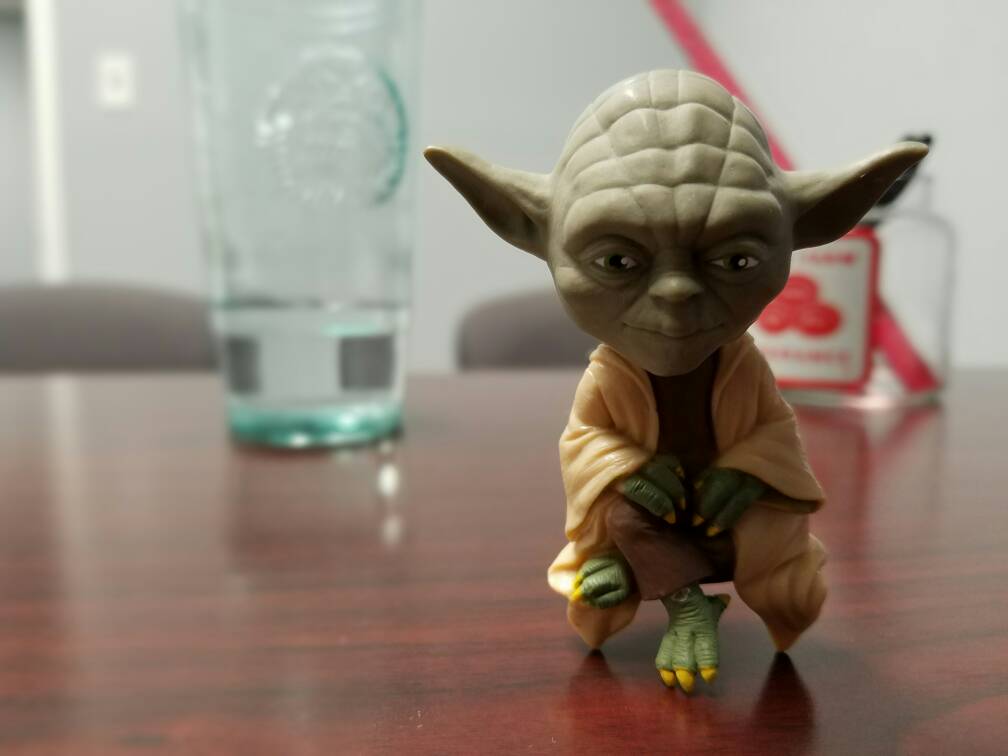
I just took this photo with the selective focus and honestly if I took better one I think it will be right up there with the iPhone 7 concept.... It not only let's u blur the background but also the foreground... and this was low light
9d642399fadeaf356ab307e9290a1639.jpg
 
I thought it was a standard camera feature? I know the galaxy s5 did it quite well over 3 years ago.
 
The 7Plus can focus on a different part of the scene, allowing the user to change focus after the fact.

Similar to a Lytro camera.
 
Seems different to me.

Apple's depth of field effect is to artificially blur the background to create bokeh effect. Samsung's selective focus is taking a few pics so that you can choose which object is in focus after that.
 
Thanks for the insight here...Camera is the number one feature for me but it would take a lot more than a Camera to make me go to iOS. If I may digress, I'm just waiting on Verizon to get the replacement Note 7's!!!
 
Being a photographer, all I can say is there is no difference between these two. When they call it depth of field, there is no aperture control to control the depth of field. All its going to do is by focus. In a real world (SLR cameras), you change the depth field by changing the aperture in the lens, while iPhone 7 comes with fixed 1.8 aperture. That said, iPhone utilizes the software feature to control the depth of field aka selective focus to capture what they call, depth of field.
To understand the aperture, you can experiment this with your eyes. If you place an object just near to your eye and you just look at that object, your eye pupil expands (lets say its around 1.4f aperture - and you can notice the background is totally blur) and when you look at an object 50 meters away pupil size decreases (around f8.0 aperture - you can see more stuffs in distance in the same glance).

IPhone 7 comes with the fixed f1.8 aperture, and is in its way to make a new legacy about depth of field - people believe whatever Apple says!
 
Being a photographer, all I can say is there is no difference between these two. When they call it depth of field, there is no aperture control to control the depth of field. All its going to do is by focus. In a real world (SLR cameras), you change the depth field by changing the aperture in the lens, while iPhone 7 comes with fixed 1.8 aperture. That said, iPhone utilizes the software feature to control the depth of field aka selective focus to capture what they call, depth of field.
To understand the aperture, you can experiment this with your eyes. If you place an object just near to your eye and you just look at that object, your eye pupil expands (lets say its around 1.4f aperture - and you can notice the background is totally blur) and when you look at an object 50 meters away pupil size decreases (around f8.0 aperture - you can see more stuffs in distance in the same glance).

IPhone 7 comes with the fixed f1.8 aperture, and is in its way to make a new legacy about depth of field - people believe whatever Apple says!

From what I read, iPhone's depth of field feature is using software to artificially blurred the background more to create a more pronounced bokeh effect.
 
Being a photographer, all I can say is there is no difference between these two. When they call it depth of field, there is no aperture control to control the depth of field. All its going to do is by focus. In a real world (SLR cameras), you change the depth field by changing the aperture in the lens, while iPhone 7 comes with fixed 1.8 aperture. That said, iPhone utilizes the software feature to control the depth of field aka selective focus to capture what they call, depth of field.
To understand the aperture, you can experiment this with your eyes. If you place an object just near to your eye and you just look at that object, your eye pupil expands (lets say its around 1.4f aperture - and you can notice the background is totally blur) and when you look at an object 50 meters away pupil size decreases (around f8.0 aperture - you can see more stuffs in distance in the same glance).

IPhone 7 comes with the fixed f1.8 aperture, and is in its way to make a new legacy about depth of field - people believe whatever Apple says!
Thanks for the comments. I almost drank the Kool-Aid. Guess waiting on my Note 7 recall/replacement has me antsy. :)
 
Being a photographer, all I can say is there is no difference between these two. When they call it depth of field, there is no aperture control to control the depth of field. All its going to do is by focus. In a real world (SLR cameras), you change the depth field by changing the aperture in the lens, while iPhone 7 comes with fixed 1.8 aperture. That said, iPhone utilizes the software feature to control the depth of field aka selective focus to capture what they call, depth of field.
To understand the aperture, you can experiment this with your eyes. If you place an object just near to your eye and you just look at that object, your eye pupil expands (lets say its around 1.4f aperture - and you can notice the background is totally blur) and when you look at an object 50 meters away pupil size decreases (around f8.0 aperture - you can see more stuffs in distance in the same glance).

IPhone 7 comes with the fixed f1.8 aperture, and is in its way to make a new legacy about depth of field - people believe whatever Apple says!

Thanks for the explanation. This makes sense. Being that the Note has a f1.7 aperture, that makes it better than the iPhone 7+, correct?
 
From what I read, iPhone's depth of field feature is using software to artificially blurred the background more to create a more pronounced bokeh effect.

That is how it sounds from their keynote. But I will be surprised if it can beat the existing monsters in the market. HTC 10 already has f/1.8 26mm and Galaxy S7 with f/1.7 26mm. Technically, S7 should be able to create better bokeh images. However, the telephoto lens (56mm) on IPhone 7 plus, could have a better chance, but the aperture is f/2.8 (which could be better than 26mm for a bokeh, but low light performance on its small sensor would be worst). either way these are no other than selective focus features.
 
Thanks for the explanation. This makes sense. Being that the Note has a f1.7 aperture, that makes it better than the iPhone 7+, correct?
Yes, it should be the case. While the 56mm lens on iPhone 7 plus could take a better bokeh in good lighting, but low light performance will be worst, with its f/2.8 aperture.
 
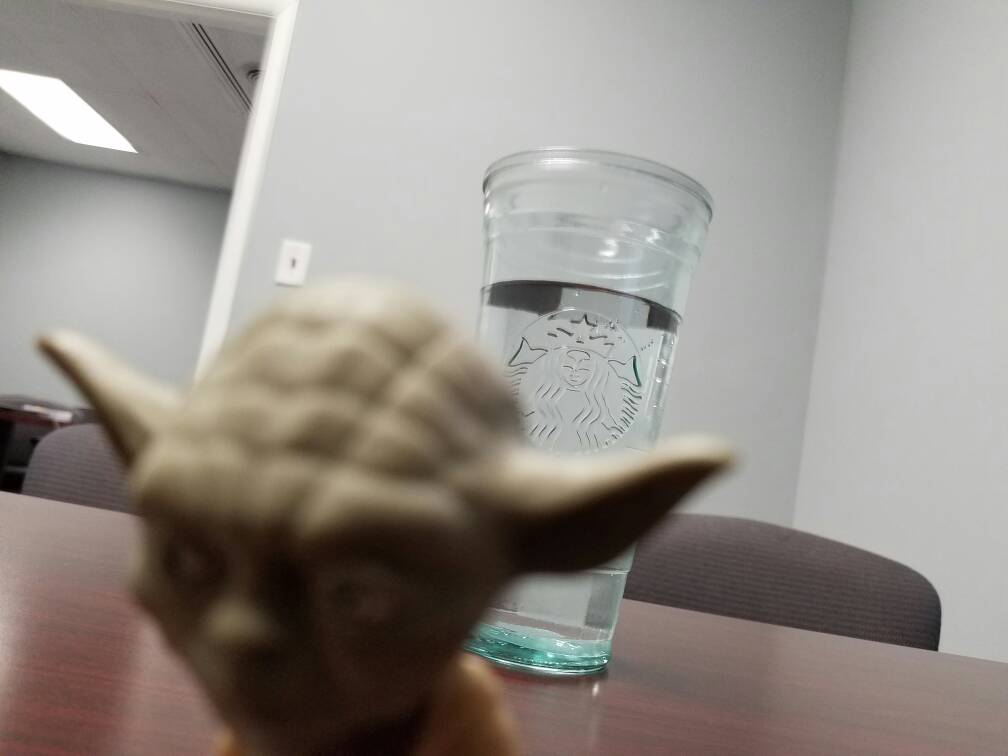
You should post the other version where the water is in focus. Selective Focus is actually pretty cool.
 
97d03dbfb02f5a2d4ed601aadecff255.jpg


Here is the other version, it didn't work too well because it kept telling me that the subject was undetected. Either way, still looks good.
 
Well with the Selective Focus mode, you can actually select the focus point from front to back in the same photo.
 

Trending Posts

Forum statistics

Threads
960,368
Messages
6,982,233
Members
3,164,509
Latest member
hodoknaru